Search & find:
media, releases and events to support your reporting about the Bosch Group.

Bosch at the IAA Mobility: Safe, emissions-free, and exciting mobility - now and ...

19.08.2021

Press release

Connected mobility

Bosch at the IAA Mobility: Safe, emissions-free, and exciting mobility - now and ...

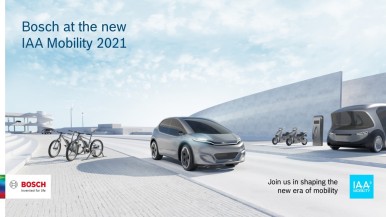
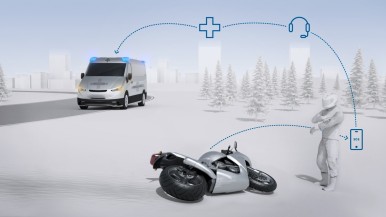
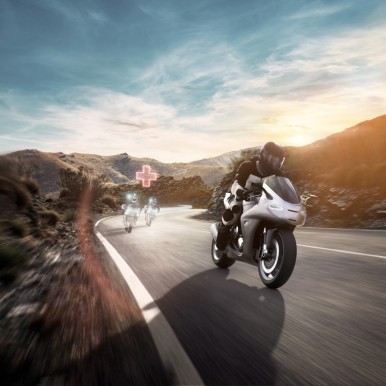
Munich, Germany - Cars, e-bikes, motorcycles, scooters, electric race cars: Bosch is rolling out mobility solutions for all types of vehicles, and is even making smartphones and people's homes an integral part of mobility. At IAA Mobility 2021 in Munich, the supplier of technology and services will be showcasing its solutions for personalized, automated, connected, and electrified mobility. Bosch will be in exhibition hall B3 at booth C30 and in the bike area, in the Messe West parking garage, and downtown at Königsplatz and Odeonsplatz.At the trade fair and downtown - get in, get on, try it out Bosch show car: In the future, more and more vehicles will be electrically powered. They will increasingly be connected with other road users and their surroundings, assume more and more of the driving task themselves, and provide personalized services for their occupants. Bosch technology for automated, electrified, personalized, and connected mobility is paving the way for this future vision of mobility. The company has the systems know-how and comprehensive software and hardware expertise that this requires. For example, Bosch is developing central computers for the electronics architecture of the future. These vehicle computers are used for assisted and automated driving, controlling vehicle motion, as well as for cockpit functions and body electronics. (Trade fair: Hall B3, booth C30) Driverless parking: Bosch and nine project partners will present the future of parking in a live demonstration. In the automated valet parking system developed jointly by Bosch and Mercedes-Benz, a smartphone command directs cars automatically to their assigned parking bays without the need for driver supervision. Interplay between the intelligent parking garage infrastructure and the vehicle technology makes this possible. Sensors in the parking garage monitor the driving aisle and its surroundings while guiding the vehicle. The in-car technology converts the commands from the infrastructure into safe driving maneuvers. A joint project with the association of the German automotive industry (VDA) shows how vehicles from different manufacturers will be able to communicate with infrastructure technology from various suppliers in the future. Against this backdrop, the project partners are also working on an international standard (ISO 23374). (Live demonstrations several times a day in the Messe West parking garage) An enhanced cycling experience: E-bikes are the best-selling electric vehicle in Europe. Riding an electrically assisted bike is good for people's health and the environment - as well as a lot of fun. Connected products and services enhance the cycling experience and connect e-bikers with the digital world. Bosch will be showcasing new connected-biking solutions and allowing visitors to see for themselves just how much fun power-assisted cycling can be. (Trade fair: Hall B3, booth C30; bike area B5, Blue Lane Micromobility: Brienner Strasse; open space: Königsplatz and Odeonsplatz) Bosch is electrifying mobility and helping mitigate global warming Bosch wants to be a key player in climate-neutral mobility. The company has set itself the goal of making all vehicle classes ready for upcoming emissions requirements. As an innovation leader, Bosch has a broader electric driving portfolio than any other company - from e-bikes to passenger cars to heavy trucks. Battery-electric power for two- and four-wheeled vehicles: From powertrains to steering systems to brakes, Bosch's portfolio includes all the building blocks for the electrification of passenger cars. One component is the e-axle , which combines the power electronics, electric motor, and transmission in a single unit. And with its pre- integrated system solutions for vehicle platforms, Bosch helps automakers bring electric vehicles to market faster than before. The key is the optimized interaction of the powertrain, steering, braking, and vehicle control in the advanced driving module , which is combined with partner solutions to form a complete axle module for the front and rear axles. Alongside efficient powertrains, Bosch also uses thermal management to increase the range of electric and hybrid vehicles. Precise control of currents of hot and cold air improves the efficiency of the battery and ensures that all components are working within their optimum temperature range. Bosch also offers drives and control units for electric two-wheelers . Integrated in a compact system, the two components ensure precise control of the motor, reliable riding performance, and optimum torque development. Fuel-cell system: Mobile fuel cells offer long ranges and short refueling times. Where they really come into their own is on long-haul routes and in commercial vehicles. With green hydrogen, fuel cells enable vehicles to be operated CO2-free. Bosch develops all the key system components to production readiness - including complete systems. For the stack, which converts hydrogen and ambient oxygen into electrical energy, the company is working with the Swedish specialist Powercell. Large-scale manufacturing of the stack is set to begin in 2022, and the launch of the complete fuel-cell system - the Bosch fuel-cell power module - is scheduled for 2023. Services for electromobility: Bosch's Battery in the Cloud prolongs the life of electric car batteries. Smart software functions in the cloud continually analyze battery status and take appropriate action to prevent or slow cell aging. The tamper-proof "usage certificate" documents the condition of the battery throughout its entire service life, thus giving a better picture of the battery's residual value if the car is sold. With charging services such as Convenience Charging , Bosch makes it easy and straightforward for drivers of electric cars to find - and pay at - publicly accessible charging stations. In addition, the integrated recharging and navigation solution allows for a precise range forecast and route planning that includes recharging stops - and comes with the option to set personal preferences, such as charging stations next to restaurants. High-speed electromobility: For everyday life and for the racetrack - Bosch is committed to becoming the leading supplier of electrified powertrain solutions, both in electromobility for production vehicles and in electrified motorsports. The company has entered into a long-term technology and development partnership with the DRAGON/PENSKE AUTOSPORT Formula E Team. And those who want to experience driving the racing series courses virtually and compete with others for the best time can do just that in two simulators. (Open space: Königsplatz) Recharging at home: Bosch's intelligent energy manager makes it possible for homeowners to reduce CO2 emissions and save energy costs. Serving as an interface between a Bosch heat pump and a photovoltaic system, it optimizes the use of home-generated solar energy and distributes it intelligently throughout the building. Alongside heating and hot water, it will also be possible to integrate electric cars into the Bosch energy management system in the future. Compatible wallboxes can then be deployed to recharge vehicles using as much home-generated electricity as possible. Bosch is automating driving and making roads safer Less stress, smoother traffic flows, greater safety - vehicles that assume more driving tasks themselves are a key building block for tomorrow's mobility. An automated vehicle must be able to do everything a human driver can: perceive its surroundings, make decisions, and accelerate, brake, and steer. Step by step, Bosch is laying the technical foundations for automated driving. With its driver assistance systems, it is already paving the way for all levels of automation. Surround sensing for all traffic situations: Sensor technology forms the basis for assisted and increasingly automated driving. To drive safely, the vehicle must be able to reliably recognize objects, people, and other road users. Bosch's multi-purpose camera combines traditional image-processing algorithms with artificial intelligence (AI) methods. Using AI, the camera understands and interprets what it sees, ensuring reliable object recognition and good surround sensing. In addition to camera, radar, and ultrasonic sensors, Bosch is also developing a long-range lidar, for which it employs various sensor principles. The more complex the driving task, the more important their interaction. Localization technology for exact positioning: Automated vehicles need to know exactly where they are at all times. Bosch offers a comprehensive package of hardware, software, and services that allows automated vehicles to precisely determine their own location. The VMPS (vehicle motion and position sensor) uses satellite navigation signals to identify the exact position, augmented by data from a correction service and information from the steering-angle and wheel-speed sensors. The Bosch road signature cloud-based map service uses data from radar and video sensors as well as vehicle motion data to create additional layers for high-resolution maps. Volkswagen Golf 8 vehicles are currently collecting this information on Europe's roads. Redundant braking and steering systems for safe and energy-saving driving maneuvers: Better safe than sorry - this holds especially true for safety-relevant functions in automated driving. Thanks to multiple redundancy, Bosch's electric steering system offers additional safety. In the rare event of a malfunction, the system is still capable of retaining 50 percent of its electric steering functionality. Bosch has also integrated a redundant architecture into the design of its braking systems : should either the iBooster (the electromechanical brake booster) or the ESP electronic stability program fail, the other component can brake the vehicle. A second braking unit serves as a backup for the integrated power brake system, which combines brake boosting technology and ESP functionality. This is an especially important requirement in automated vehicles. In addition, Bosch's regenerative braking systems help save CO2: in a very smooth process, which is unnoticeable for the driver, they make it possible to switch between generator and friction braking, thus enabling braking energy to be converted back into electrical energy and fed back into the battery every time the vehicle is braked. Services for automated driving: Bosch's predictive road-condition services raise the alert in the event of potential hazards long before critical situations develop. They provide real-time information about road conditions and risks such as aquaplaning, ice, and snow. This enables automated vehicles to correctly anticipate road conditions, adapt their driving behavior to the conditions, choose a different route, or even ask the driver to take control. Bosch connects vehicles with each other and with their surroundings: Vehicles that warn each other of danger, keep a protective eye on their occupants, and communicate with the smart home - Bosch connects systems, components, and services inside and outside the vehicle, making mobility more efficient, safer, and more relaxed. Users, vehicles, and surroundings are seamlessly connected, making driving more enjoyable and providing a personalized mobility experience. Smart car meets smart home: Bosch is turning cars into the command centers for smart homes: using Mercedes-Benz's MBUX infotainment system, Bosch Smart Home applications can be controlled by voice command from the vehicle. In addition to shutters and heating thermostats, the system can also be used to control light switches and smart adapters, and to check the status of motion detectors and door/window contacts. Using voice commands allows the driver to stay focused on the road. Guardian angel for all areas of life: In the shape of Help Connect , Bosch has developed a digitally connected emergency call system for motorcycles and other vehicles. A smart crash algorithm added to the acceleration sensors in the Bosch MSC motorcycle stability control system allows accidents to be detected. A smartphone app transmits information about the accident scene and the rider to a service center, and from there to the emergency services. If the motorcycle has no permanently installed accident detection system, the sensor data from the smartphone can be used to initiate the emergency response. Bosch Help Connect can also provide assistance at home, in the gym, or when out cycling. Indoor monitoring for better occupant protection: Bosch has developed a system comprising cameras and AI that can increase the safety of vehicle occupants. The interior monitoring system detects driver drowsiness and distraction, or if occupants are in an unsafe seating position. It warns inattentive drivers, recommends a break if they are getting tired, and can reduce vehicle speed - depending on the automaker's wishes and legal requirements. The system also enhances convenience by automatically adjusting the seat, mirrors, and steering wheel height in line with individual preferences as well as enabling gesture control of the infotainment system. Wrong-way driver alert: Bosch's cloud-based wrong-way driver warning system warns both the wrong-way driver and all road users at risk of the impending danger within seconds - much faster than traffic news on the radio. In early 2021, SKODA became the first automaker worldwide to opt for Bosch's digital guardian angel. The lifesaving warning is flashed up directly on the display in the vehicle cockpit. As an app solution for smartphones, this service already has 2.5 million active users in 20 European countries. Smartphones as car keys: With Perfectly Keyless , sensors in the car recognize the owner's smartphone as securely as a fingerprint and open the vehicle only at their request. The cell phone thus displaces the conventional car key. Thanks to ultra- wideband technology, the system also offers other practical everyday advantages: it is even easier to maneuver the car into tight parking spaces by remote control or to open the trunk remotely so that package handlers can deposit deliveries in it. For large parking lots where it is difficult to locate vehicles, Perfectly Keyless helps find the way to the car and illuminates the path by switching on the headlights, providing extra safety in the dark.

Camera-based life-saver: Bosch helps cars keep an eye on their passengers

10.01.2020

Press release

Connected mobility

Camera-based life-saver: Bosch helps cars keep an eye on their passengers

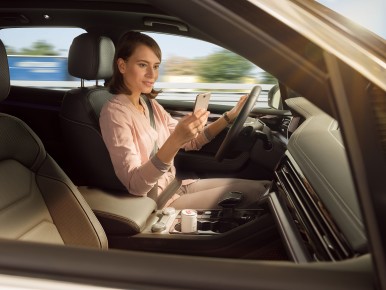
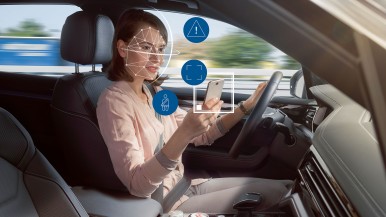
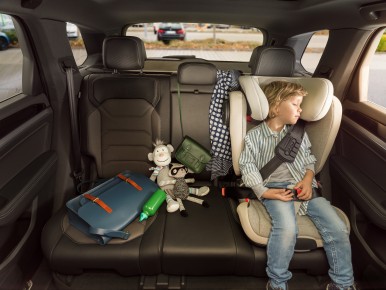
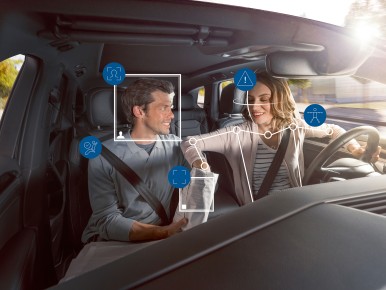
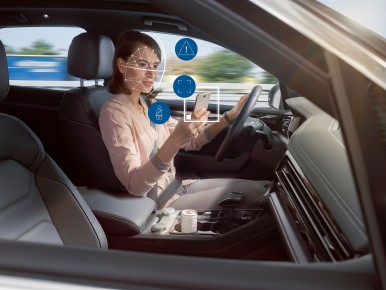
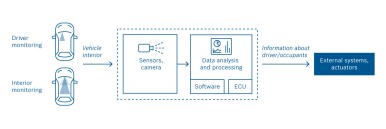
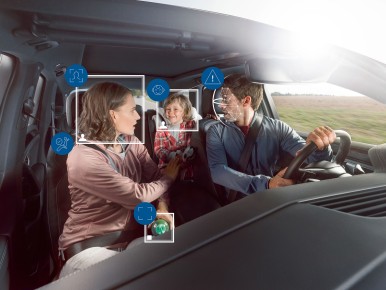
Stuttgart, Germany – Microsleep, distraction, a seatbelt left undone – many things that happen inside a vehicle can have far-reaching consequences. To avert critical driving situations and possibly also accidents, it is planned that cars will in the future use their sensors not simply to monitor the road but also the driver and other passengers. For this purpose, Bosch has developed a new interior monitoring system featuring cameras and artificial intelligence (AI). “If the car knows what its driver and occupants are doing, driving will become safer and more convenient,” says Harald Kroeger, a member of the Robert Bosch GmbH board of management. The Bosch system may go into production in 2022. In that year, the EU will make safety technology that for example warns drivers of drowsiness and distraction a standard feature in new vehicles. The EU Commission expects that, by 2038, their new safety requirements for vehicles will save more than 25,000 lives and help prevent at least 140,000 severe injuries. By keeping an eye on what is happening inside the car, it is hoped that a fundamental problem of self-driving cars will be solved. If responsibility for driving is to be transferred to the driver again following an automated drive on the freeway, say, the car needs to be sure that the driver is neither sleeping, nor reading the newspaper, nor writing e-mails on their smartphone.A smart camera constantly monitors the driver At 50 kph, a vehicle will cover 42 meters completely unsupervised if the driver dozes off or looks at their smartphone for just three seconds. Many people underestimate the associated risk. International studies state that nearly one in ten accidents are caused by distraction or drowsiness. This has prompted Bosch to develop an interior monitoring system that detects and alerts to this danger and provides driving assistance. A camera integrated in the steering wheel detects when drivers’ eyelids are getting heavy, when they are distracted, and when they turn their head toward their passenger or the rear seats. Thanks to AI, the system draws the right conclusions from this information: it warns inattentive drivers, recommends a break if they are getting tired, or even reduces the speed of the vehicles – depending on the automaker’s wishes, and also on legal requirements. “Cameras and AI will turn the vehicle into a life-saver,” Kroeger says. To achieve this, Bosch engineers have used intelligent image-processing algorithms and machine learning to teach the system to understand what the person in the driving seat is actually doing. To take the example of driver drowsiness, the system is trained using recordings of real driving situations and, on the basis of recordings of eyelid position and eye-blink rate, learns how tired the driver really is. This allows it to give an alert that is appropriate to the situation, and to use the driver assistance systems to intervene. Warning systems that sound the alert in the case of distraction and drowsiness will be so important in the future that NCAP, the European New Car Assessment Program, will include them in the roadmap for the Euro NCAP assessment for vehicle safety by 2025. On the subject of monitoring, only the software in the vehicle itself evaluates the information provided by the interior monitoring system – the information is neither saved nor passed on to third parties. Like a relay race: responsibility for steering passes from car to driver and back At the latest when cars start driving automatically, it is obvious how important it is that they understand their drivers. Once driving is automated, cars will drive along freeways without driver intervention. However, they will also have to be able to hand back control to their drivers in tricky situations such as construction zones, or when the exit ramp is drawing near. Drivers have to be able to safely take the wheel again at any time during the automated driving phase, and the camera makes sure they don’t fall asleep. If their eyes remain closed for a prolonged period, an alarm is sounded. The system also interprets camera recordings to establish what drivers are currently doing, and how ready they are to respond. The transfer of driving responsibility is then timed accordingly. “Bosch driver observation will be essential for safe automated driving,” Kroeger says. When the car keeps its camera eyes open But the new Bosch system keeps its eye not only on the driver, but also on all the other passengers, whether next to or behind the driver. For this purpose, a camera mounted above or below the rear-view mirror monitors the entire passenger compartment. It notices whether children on the rear seats have carelessly unfastened their seat belts, and warns the driver. If someone sitting in the back is leaning too far forward, at an angle, or with their feet up on the seat next to them, the airbags and belt tensioner will not be able to protect them properly in an accident. The interior monitoring camera can tell what position they are sitting in and set the airbags and belt tensioner to ensure the best possible protection. The interior monitoring system also prevents the passenger-seat airbag from being deployed if a baby’s carrycot is on the seat. On the subject of children, it is a sad fact that parked vehicles can be a death trap for them. In the United States in 2018, they claimed the lives of more than 50 children (source: KidsAndCars.org), either because they had been left in the car for a short while or had clambered in unnoticed. The new Bosch system can recognizes this danger, and warn parents in a flash by sending a message to their smartphone. In an emergency, it also can alert the emergency services. As the Hot Cars Act currently being debated in the United States shows, legislators are interested in technology solutions to address this challenge. A camera for more convenience The new Bosch system also means more driving convenience. The interior monitoring camera can tell who is about to drive and adjust the rear-view mirror, seating position, steering-wheel height, and infotainment system to preset personal preferences. And the camera can also be used for eye- and handgesture control of the infotainment system. Bosch at CES 2020: • PRESS CONFERENCE: In Ballrooms B, C, and D, Mandalay Bay Hotel, Las Vegas South Convention Center, Level 2, from 9:00 to 10:30 a.m. local time on Monday, January 6, 2020 . • BOOTH: Tuesday to Friday, January 7–10, 2020 , in the Central Hall, booth #12401 • FOLLOW the Bosch CES 2020 highlights on Twitter: #BoschCES • PANELS WITH BOSCH EXPERTS: Wednesday, January 8, 2020, 10:15 to 11:15 (local time) Event on the subject of “Growth of Apprenticeships for ‘New Collar’ Jobs” with Charlie Ackerman, Senior Vice President of Human Resources, Las Vegas, South Convention Center